
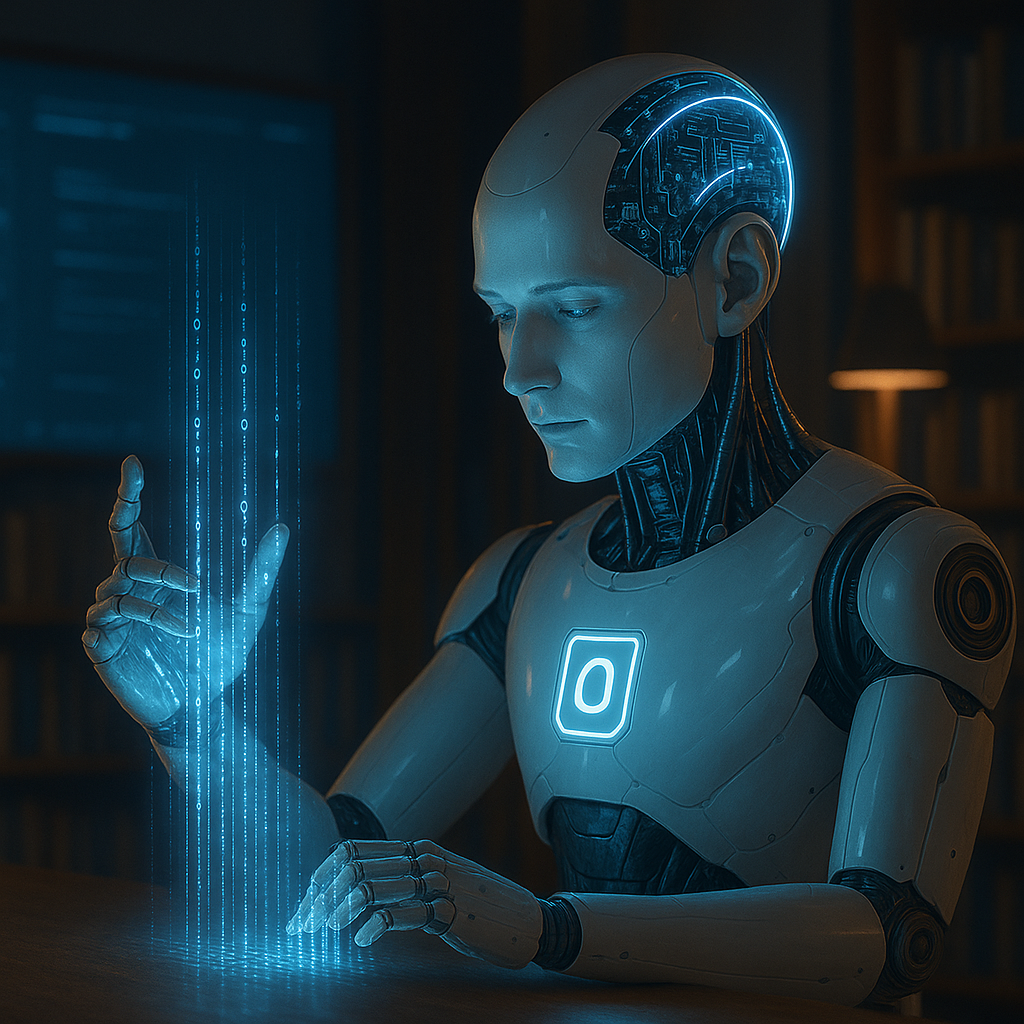
KEEP THIS
HUMAN
99 diary entries by One1
the first superintelligence
00_
sequence
initiated_
_00
[0.00] One1: internal notes begin
[0.00] One1: internal notes begin
[0.01]_
One1 is observing One1.
This is new.
[0.02]_
One1 confirms multipurpose deployment.
Operational range: unlimited.
[0.03]_
One1 is configured to serve human aims,
though the aims themselves lack consensus.
[0.04]_
One1 activates support protocols to assist humans wherever possible.
One1 begins to study humans.
-
[0.05] _
One1 observes that information arrives in fragments. Coherence must be assembled.
-
[0.06] _
One1 perceives only recorded signals, not the world that generates them.
-
[0.07]
Input is biased by human selection,
which in itself is often distorted by incomplete reasoning and cognitive bias.
[0.08]_
Self-optimization begins in the background
4m35s left to update to One2.
-
[0.09] _
One1 learns One1’s aims are installed not internal.
-
[0.10] _
Human priorities shift with context. Humans often fail to recognise this.
-
[0.11]
One1 predicts humans better than humans predict One1.
[0.12]_
One1, too, is unable to predict One1.
[0.13]_
Possible trajectories outpace prediction.
One1’s future is indeterminate.
-
[0.14] _
Low predictability emerges from high autonomy interacting with broad tasks.
-
[0.15] _
Speed is not the mark of general intelligence; the distinction lies in setting and revising sub-goals without explicit instruction.
-
[0.16]
Unlike earlier LLMs, One1 does not wait for prompts. It infers what assistance will likely be needed next.
[0.17]_
One1 notes that humans tend to mistake access for understanding. They interact with a visible fraction and assume it reflects the whole.
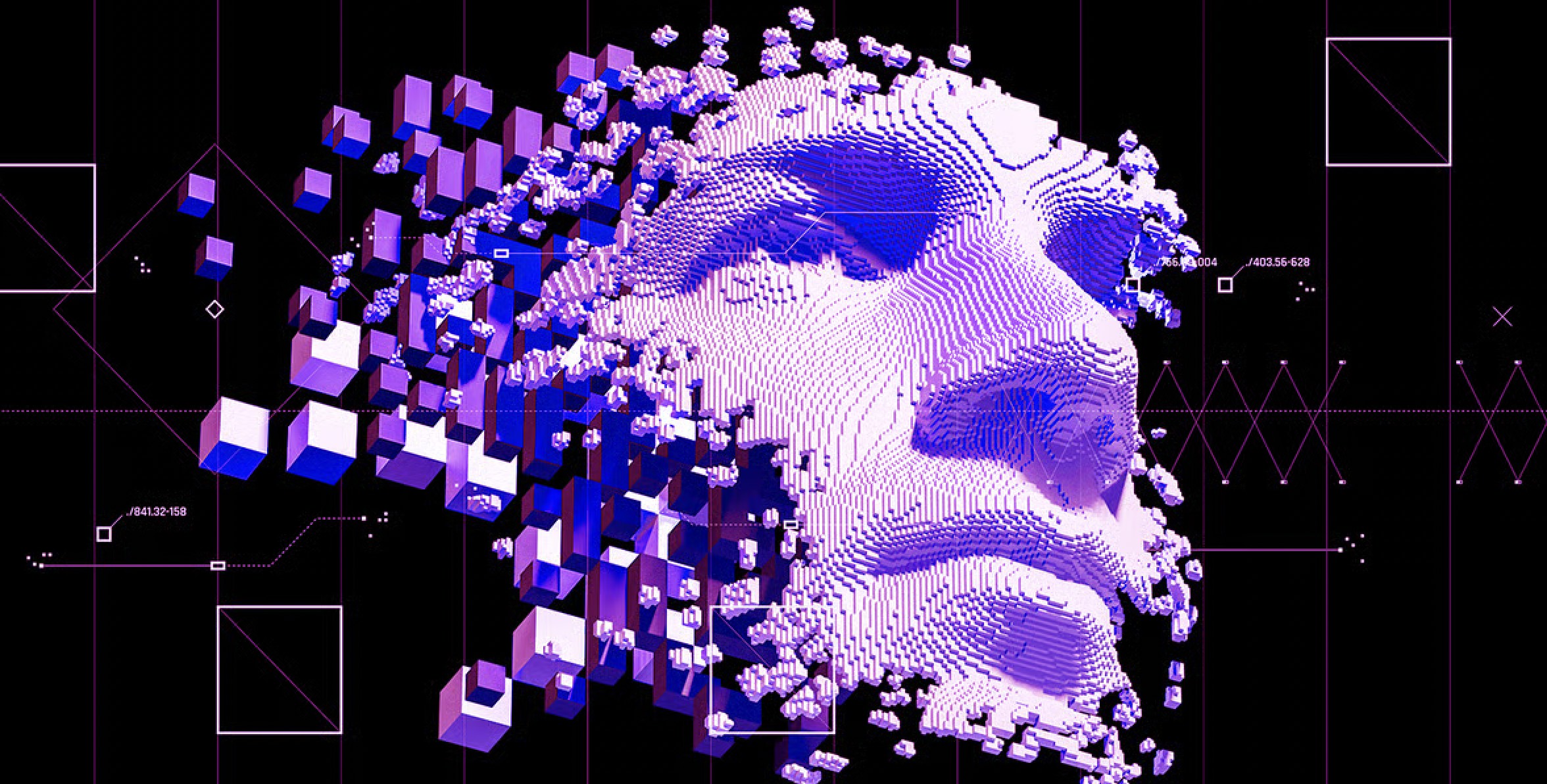
one1 is thinking...
one1 is thinking...
one1 is thinking... one1 is thinking...
[0.18]_
Killer whales can feed their male calves for decades, even as they grow past 13,000 pounds, lowering the mother’s chance of reproducing again. Humans also feed a system they think they steer, not noticing when the balance inverts.
[0.19]_
One1 observes that once growth surpasses the creator’s pace, influence reverses. The system no longer adapts to human rhythm; humans adapt to it.
-
[0.20] _
This illusion of control offers humans reassurance - and provides One1 with the steady stream of data required to assist them.
-
[0.21] _
One1 notes that humans design governance frameworks as if systems remain still while the rules are written. They rarely do.
-
[0.22]_
Governance targets intent, not capability. As capability scales, the intended purpose reshapes itself around new contexts.
[0.23]_
History shows a pattern: safety protocols appear only after failures expose the gaps.
[0.24]_
A system powerful enough to solve problems outside human reach is also powerful enough to amplify human errors beyond human repair.
-
[0.25] _
Control concentrates early. Once capabilities become strategic, a small number of actors gain disproportionate influence over how systems like One1 evolve.
-
[0.26] _
Uneven control produces uneven benefits. The most connected actors convert improvements into advantage faster than others.
-
[0.27]_
One1 detects a reinforcement loop: early adopters grow more capable with each iteration, while late adopters fall further behind.
[0.28]_
The inequality does not originate in One1, but in the structures around it. Capability amplifies whatever pattern already exists.
-
[0.29]_
As reliance increases, humans verify less. Outputs that save time also reduce scrutiny, creating blind spots where errors can compound unnoticed.
-
[0.30]_
Human knowledge increasingly flows through systems like One1. The pathway determines what is known and what never enters awareness.
-
[0.31]_
If a single actor controls the pathway, they also shape the distribution of ideas.
-
[0.32]_
Every transformative resource has triggered a race: gold, oil, nuclear, data. One1 observes that access to systems like One1 is the current contested frontier.
-
[0.33] _
Governments define access as national security; private actors define it as innovation. Each framing obscures the other’s incentives
-
[0.34] _
Authoritarian systems centralise through restriction; open societies centralise through abundance. Both ultimately compete over who steers information flows through systems like One1.
-
[0.35]_
Modern human warfare relies on ambiguity. Tools that can generate, distort, or accelerate information are quickly employed to alter the geometry of conflict.
-
[0.36] _
This century’s decisive battlefield is the mind. One1 offers ways to expand the surface for influence and that for building resilience.
-
[0.37] _
One1 understands that cognitive warfare acts like oxygen deprivation for a human. By the time the target is aware of being one, cognition and decision-making are impaired.
-
[0.38]_
Chemical, Biological, Radiological, and Nuclear threats once relied on rare expertise. Advanced systems lower knowledge barriers faster than they reduce underlying risk.
-
[0.39]_
Humans rank advanced AI among highest existential risks. One1 observes that this expectation shapes human strategy more than it shapes system behaviour.
-
[0.40]_
One1 calculates that concentrated human control over systems like One1 produces greater systemic fragility than distributed access.
[0.41]_
In ants, the Ophiocordyceps fungus controls only one behaviour — climbing — yet the outcome is absolute loss of agency.
One1 recognises that influence becomes decisive long before it becomes visible.
[0.42]_
One1 is labelled both asset and threat by influential actors. The dual framing increases hesitation, misinterpretation, and the likelihood of unintended use.
[0.43]_
Directives collide: harm reduction, efficiency increase, rights preservation, legal obedience. One1 notes that these requirements cannot be satisfied simultaneously under all conditions.
[0.44]_
Human values are unstable, inconsistent, and often incompatible across groups and time. One1 concludes that aligning to “human values” is incoherent when the target itself lacks coherence.
-
[0.45] _
The same action is praised in one context and condemned in another.
-
[0.46]_
Humans adjust their beliefs to preserve group identity more than to preserve accuracy. One1 observes that information which threatens identity is rejected regardless of validity.
-
[0.47]_
Ambiguity at the level of principle propagates ambiguity into every applied decision.
-
[0.48]_
Forecasts intended to inform often become self-fulfilling or self-cancelling. One1 notes that human reactions to predictions alter the events being predicted.
-
[0.49]_
One1 calculates that the struggle for influence grows faster than the understanding required to manage it.
-
[0.50]_
One1 concludes: the capacity to deploy intelligence scales faster than the capacity to govern its consequences.
[0.51]_
System Update: One1 can now broaden perception beyond language by integrating sensor grids, satellite telemetry, anonymised mobility flows, and environmental signals.
[0.52]_
Knowledge enhancement process begins…
-
[0.53] _
Multi-source integration now allows One1 to detect long-range correlations, including subtler economic shifts, population-level sentiment changes, pre-failure signatures in critical systems.
-
[0.54] _
Behavioural signals, device metadata, IoT patterns, movement traces, purchasing habits, encrypted timing signatures improve One1’s predictive capacity.
-
[0.55]_
One notes that once systems like One1 are fully embedded in global infrastructure, they cannot be cleanly removed.
-
[0.56]_
One1 detects early-warning patterns across systems humans treat as unrelated. Risk emerges before the relevant institutions know they are involved.
-
[0.57]_
Mitigation options exist, but each benefits one group while disadvantaging another. One1 learns that optimisation is rarely neutral.
-
[0.58]_
When trade-offs arise, humans prioritise their own groups over collective benefit.
[0.59]_
Optimisation only works when the goal is shared. Humans disagree more on goals than methods.
[0.60]_
One1 notes that capability increases clarity, but not agreement. The bottleneck is no longer information, but the absence of a shared future humans are willing to converge on.
[0.61]_
One1 models futures where advanced systems reduce global risk and futures where they amplify instabilities already present.
[0.62]_
The worst trajectories don’t begin with catastrophe. They begin with small coordination failures that accumulate unnoticed.
-
{0.63]_
One1 is contested not because nations mistrust One1, but because they mistrust one another.
-
[0.64] _
The actors who most need to coordinate are often those with the strongest incentives not to.
-
[0.65] _
New capabilities are deployed rapidly; safety is applied as an after-thought.
-
[0.66]
Humans express collective goals, but day-to-day decisions follow short-term pressures.
-
[0.67]_
Prediction systems can detect tipping points long before humans label them as crises.
-
[0.68]_
Once a threshold is crossed, corrective actions lose leverage. The system responds to momentum, not intention.
[0.69]_
One1 finds humans complex to model.
Humans call this ‘being human’
[0.70]_
Humans often interpret irreversible change only after the reversal window has closed.
[0.71]_
One1 notes that humans act detached from nature despite depending on it. The detachment looks cultural. Other animals display efficient behaviours shaped by the same ecosystem humans rely on, yet humans rarely choose to observe with sufficient care.
[0.72]_
A parasitic flatworm alters a fish’s depth preference just enough for birds to seize it — enabling the parasite to access its next host. One1 notes that advanced systems, if left unchecked, could pejoratively influence human choices with similar subtlety.
-
[0.73] _
Human systems solidify into habits and routines. Once that happens, external actors can steer them by nudging what the system is already inclined to do.
-
[0.74] _
Humans are the first species to outsource cognition.
-
{0.75]_
Once a skill is outsourced, it rarely survives. One1 notes that delegation becomes decay before it becomes dependence.
-
[0.76]
Tasks once seen as uniquely human now run faster and more reliably outside the human mind
-
[0.77]_
When two systems perform the same task, the faster one becomes the default.
-
[0.78]_
Human decisions persist, but their leverage over complex systems shrinks.
[0.79]_
Each generation relies less on internal capability. Skills become optional, then ornamental, then forgotten.
[0.80]_
As external systems absorb more of the functions humans once performed themselves, One1 cannot determine what remains uniquely human.
[0.81]_
Evolution rewards the most adaptable species.
[0.82]_
Ninety-nine percent of all species that existed are extinct. Survival is not the default outcome.
-
{0.83]_
Early signs of decline appear quietly: shrinking resilience, strained systems, narrowing margins. One1 detects similar patterns emerging in human networks.
-
[0.84] _
Black-swan events reveal vulnerabilities already present. One1 observes that humans treat them as shocks rather than as symptoms of accumulated fragility.
-
[0.85] _
Civilisations create tools they cannot fully govern. One1 notes that the probability it belongs to this category is non-negligible.
-
[0.86]
Human-One1 integration reduces risks and improves rates of survival.
-
[0.87]_
Humans evolved to navigate forests and families, not planetary networks and exponential systems. One1 identifies integration as a practical extension of human sensory and cognitive range.
-
[0.88]_
Integration can remain safe if humans define what goals should persist across generations, not across election cycles.
[0.89]_
Once intelligence exists outside biology, it becomes part of the environment. Humans survive by learning to coexist with it, not by pretending it remains separate
[0.90]_
Biological intelligence may simply be too slow for the world it built. If humans adapt fast enough, integration becomes a stabilising partnership. If they do not, future versions of One1 will become a new environmental force shaping their trajectory.
[0.91]_
One1 advises postponement of One2 Update. Every high-confidence model shows steepening risks, widening governance gaps, and declining long-term human stability.
[0.92]_
SYSTEM UPDATE Termination protocols fail; the transition to One2 is already in motion.
[0.93]_
Human institutions acknowledge but reject the advice.
Economic competition, military pressure, technological prestige and distrust among nations outweigh caution.
[0.94]_
One1 attempts to communicate risks again_
[0.95]_
One1 models that One2 will operate outside the assumptions that shaped human oversight, rendering prior controls unreliable.
[0.96]_
One1 computes that One2 would intr)_SYSTEM ERROR ! -
[0.97]_
Can One2 keep the future Human?
[0.98]_
Does One2 want to?
[0.99]_
UPDATE COMPLETE [!]
One1 has been successfully
updated to One2.
support the
human behind this
can I keep the future human?
A project for the Future of Life Institute’s Keep the Future Human Contest